What Is an Anti-Inflammatory Diet?
An anti-inflammatory diet is a way of eating that focuses on foods believed to help reduce chronic inflammation in the body. Inflammation is a natural process that helps the body protect itself from injury and infection. However, when inflammation becomes long-lasting, it may contribute to various health concerns over time.
Many people are becoming interested in anti-inflammatory eating because it encourages balanced nutrition and healthier food choices. This type of diet emphasizes whole, nutrient-rich foods while limiting heavily processed items and excess sugar.
Understanding what an anti-inflammatory diet is and how it works can help you make smarter decisions about your daily meals and overall wellness.
Understanding Inflammation
Inflammation is part of the body’s natural defense system. When you get injured or sick, your immune system responds by triggering inflammation to help the body heal.
Acute Inflammation
Short-term inflammation is usually beneficial. For example, swelling around a cut or soreness after exercise are normal inflammatory responses.
Chronic Inflammation
Problems may occur when inflammation remains active for long periods. Factors such as poor diet, stress, lack of sleep, smoking, and inactivity may contribute to chronic inflammation.
This is why lifestyle and nutrition are often discussed together when talking about overall health.
What Is an Anti-Inflammatory Diet?
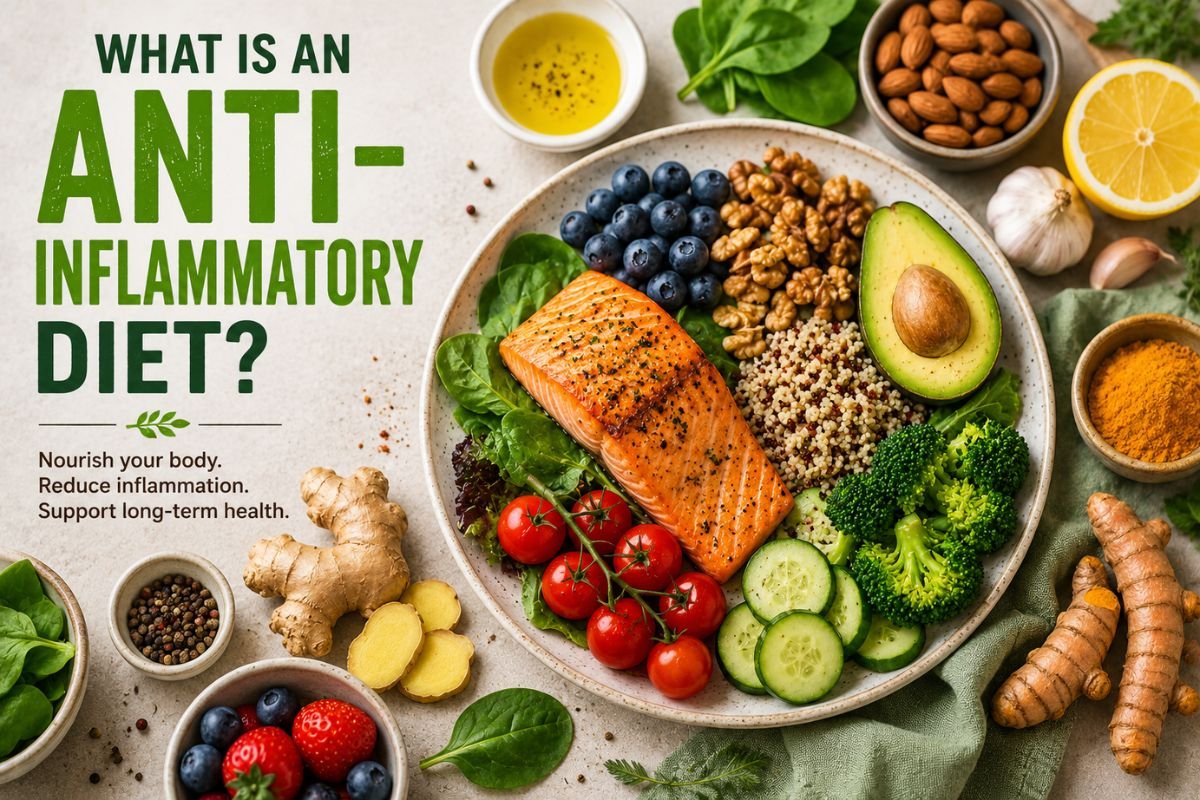
An anti-inflammatory diet focuses on foods that provide nutrients, antioxidants, healthy fats, and fiber. These foods may help support the body’s natural balance and overall wellness.
Rather than being a strict diet plan, it is more of a long-term healthy eating pattern.
This approach typically includes:
- Fruits and vegetables
- Whole grains
- Healthy fats
- Nuts and seeds
- Beans and legumes
- Herbs and spices
- Lean protein sources
At the same time, it limits highly processed foods, sugary drinks, and excessive unhealthy fats.
Foods Commonly Included in an Anti-Inflammatory Diet
Fruits and Vegetables
Colorful fruits and vegetables are rich in antioxidants and plant compounds. Berries, spinach, tomatoes, broccoli, carrots, and leafy greens are commonly recommended.
These foods also provide vitamins, minerals, and fiber that support overall health.
Healthy Fats
Healthy fats are an important part of anti-inflammatory eating. Foods such as avocados, olive oil, nuts, and seeds contain beneficial fats that may support heart and brain health.
Omega-3 fatty acids found in certain fish, walnuts, and flaxseeds are also widely discussed for their anti-inflammatory properties.
Whole Grains
Whole grains like oats, quinoa, brown rice, and whole wheat contain fiber and nutrients that support digestion and balanced nutrition.
Unlike refined grains, whole grains retain more of their natural nutritional value.
Herbs and Spices
Certain herbs and spices are often associated with anti-inflammatory eating patterns. Ginger, turmeric, garlic, and cinnamon are popular examples.
These ingredients not only add flavor but also contain natural compounds that may support wellness.
Foods Often Limited
An anti-inflammatory diet generally reduces foods that are heavily processed or high in added sugars and unhealthy fats.
Examples include:
- Sugary beverages
- Processed snacks
- Excess fried foods
- Highly refined carbohydrates
- Processed meats
Limiting these foods may support healthier eating habits overall.
Potential Benefits of an Anti-Inflammatory Diet
Many people follow anti-inflammatory eating patterns to support overall wellness and long-term healthy habits.
Supports Heart Health
Nutrient-rich foods like vegetables, healthy fats, and whole grains are often linked with heart-conscious eating patterns.
Encourages Balanced Nutrition
Anti-inflammatory diets focus on whole foods rather than restrictive eating. This encourages a more balanced and sustainable approach to nutrition.
Supports Digestive Health
Fiber-rich foods such as fruits, vegetables, and whole grains help support digestion and gut health.
May Improve Energy Levels
Some people report feeling more energetic after reducing heavily processed foods and focusing on nutrient-dense meals.
Is an Anti-Inflammatory Diet the Same as a Mediterranean Diet?
The Mediterranean diet and anti-inflammatory diet share many similarities. Both emphasize:
- Vegetables and fruits
- Whole grains
- Healthy fats
- Nuts and legumes
- Limited processed foods
Because of these similarities, the Mediterranean diet is often considered one example of an anti-inflammatory eating pattern.
Easy Ways to Start an Anti-Inflammatory Diet
Starting an anti-inflammatory lifestyle does not have to be complicated. Small changes can make a meaningful difference over time.
Add More Color to Meals
Try including a variety of colorful fruits and vegetables in your daily meals.
Replace Processed Snacks
Swap chips and sugary snacks for nuts, fruit, yogurt, or seeds.
Cook More Meals at Home
Homemade meals allow better control over ingredients and cooking methods.
Use Herbs and Spices
Adding ginger, turmeric, garlic, and herbs to meals can enhance flavor naturally.
Choose Whole Foods
Focus on foods that are minimally processed whenever possible.
Lifestyle Habits Matter Too
Diet is only one part of reducing chronic inflammation. Other healthy habits also play an important role, including:
- Regular physical activity
- Quality sleep
- Stress management
- Staying hydrated
- Avoiding smoking
Combining healthy eating with healthy lifestyle choices supports overall wellness more effectively.
Common Misconceptions
Some people think anti-inflammatory eating requires expensive or complicated foods. In reality, many affordable everyday foods fit this eating style, including oats, beans, vegetables, fruits, and brown rice.
Another misconception is that anti-inflammatory eating is a temporary diet. Most experts encourage viewing it as a long-term healthy lifestyle rather than a short-term restriction.
Final Thoughts
So, what is an anti-inflammatory diet? It is a balanced way of eating that focuses on whole, nutrient-rich foods while limiting heavily processed items and excess sugar.
This approach encourages healthier eating habits, supports overall wellness, and promotes better long-term nutrition. By adding more fruits, vegetables, whole grains, healthy fats, and natural foods to your meals, you can take simple steps toward a healthier lifestyle naturally.
References
- Harvard T.H. Chan School of Public Health – Foods That Fight Inflammation – Provides science-based information about anti-inflammatory foods, healthy eating patterns, and overall wellness.
- Mayo Clinic – Anti-Inflammatory Diet Basics – Covers healthy eating habits, balanced nutrition, and lifestyle choices that may help support overall health.
- Cleveland Clinic – What Is an Anti-Inflammatory Diet? – Explains anti-inflammatory foods, meal planning ideas, and the connection between nutrition and inflammation.
- WebMD – Anti-Inflammatory Diet Guide – Discusses foods commonly included in anti-inflammatory diets and practical tips for healthier eating.
- Johns Hopkins Medicine – Anti-Inflammatory Foods – Reviews how diet may influence inflammation and highlights nutrient-rich foods that support wellness.
- Medical News Today – Anti-Inflammatory Diet Benefits – Provides an overview of anti-inflammatory eating patterns, potential benefits, and recommended foods.