How Does Intermittent Fasting Work?
Intermittent fasting has become one of the most popular health and wellness trends in recent years. Many people use it for weight management, better eating habits, and improved overall health. Unlike traditional diets that focus mainly on what you eat, intermittent fasting focuses more on when you eat.
This eating pattern alternates between periods of eating and fasting. During the fasting window, you avoid consuming calories, allowing your body to use stored energy more efficiently. While the concept may sound difficult at first, many people find intermittent fasting simple to follow once they understand how it works.
What Is Intermittent Fasting?
Intermittent fasting is an eating schedule that cycles between eating periods and fasting periods. It does not necessarily restrict specific foods, although healthy eating is still important.
The main idea is to give your body enough time without food so it can switch from using recently consumed calories to using stored energy, particularly fat.
There are several common intermittent fasting methods:
16:8 Method
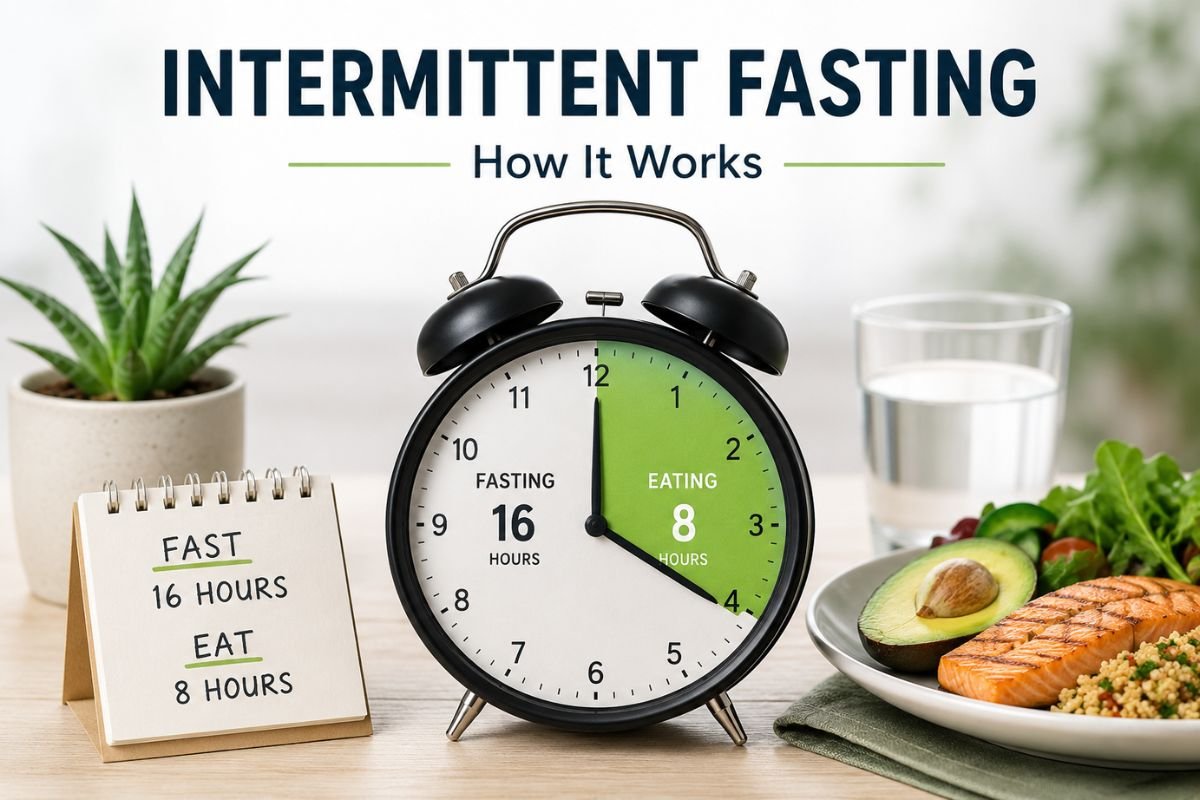
This is one of the most popular approaches. You fast for 16 hours and eat during an 8-hour window. For example, you may eat between 12 PM and 8 PM and fast overnight.
12:12 Method
This beginner-friendly method involves fasting for 12 hours and eating during the remaining 12 hours.
5:2 Method
With this approach, you eat normally for five days of the week and reduce calorie intake significantly on two non-consecutive days.
Alternate-Day Fasting
Some people fast every other day or consume very limited calories during fasting days.
Different people choose different methods depending on their lifestyle and goals.
How Intermittent Fasting Works in the Body
To understand intermittent fasting, it helps to know how the body normally uses energy.
After eating, your body breaks down food into glucose, which is used as a primary energy source. Insulin levels increase to help move glucose into cells.
When you stop eating for several hours, insulin levels begin to drop. As stored glucose becomes limited, the body starts using stored fat for energy. This shift is one reason intermittent fasting is commonly associated with weight management.
Fasting also gives the digestive system a break, which may help some people feel lighter and more energized.
Potential Benefits of Intermittent Fasting
Many people try intermittent fasting because of its potential health benefits. While individual experiences vary, some commonly reported benefits include:
Weight Management
Intermittent fasting may help reduce overall calorie intake because people eat within a smaller time window. Some individuals also find it easier to control snacking habits and late-night eating.
Improved Eating Habits
Fasting schedules can encourage more mindful eating. Many people become more aware of meal timing and food quality.
Better Energy Regulation
Some people report steadier energy levels after adapting to intermittent fasting. Avoiding constant snacking may help reduce energy crashes during the day.
Simpler Meal Planning
Since there are fewer meals during fasting schedules, some people find meal planning easier and more convenient.
What Can You Drink During Fasting?
During fasting periods, calorie-free beverages are usually allowed. Common options include:
- Water
- Black coffee
- Plain tea
- Sparkling water without sugar
Staying hydrated is important because fasting can sometimes lead to dehydration if fluid intake is too low.
Common Challenges for Beginners
Intermittent fasting can feel challenging at first, especially for beginners. Some common side effects during the adjustment phase include:
- Hunger
- Mild headaches
- Low energy
- Irritability
- Difficulty concentrating
These symptoms often improve as the body adapts to the new eating schedule.
Starting slowly with shorter fasting periods can make the transition easier.
Tips for Starting Intermittent Fasting
Start Gradually
Instead of jumping directly into long fasts, begin with a simple 12-hour fasting schedule and increase gradually if comfortable.
Focus on Nutritious Foods
What you eat still matters. Balanced meals with protein, fiber, healthy fats, fruits, and vegetables help support energy and fullness.
Stay Hydrated
Drinking enough water during fasting and eating periods is essential.
Avoid Overeating
Some beginners eat excessive amounts during eating windows, which can reduce the benefits of fasting.
Listen to Your Body
Intermittent fasting is not one-size-fits-all. If you feel unwell or constantly fatigued, adjusting your schedule may help.
Who Should Avoid Intermittent Fasting?
Intermittent fasting may not be suitable for everyone. Certain individuals should speak with a healthcare professional before trying it, including:
- Pregnant or breastfeeding women
- People with diabetes or blood sugar concerns
- Individuals with a history of eating disorders
- People taking certain medications
- Those with specific medical conditions
Health needs vary from person to person, so professional guidance can be important.
Is Intermittent Fasting a Diet?
Intermittent fasting is better described as an eating pattern rather than a strict diet. It focuses on meal timing instead of eliminating entire food groups.
Some people combine intermittent fasting with other healthy habits such as exercise, balanced nutrition, and better sleep to support overall wellness.
Final Thoughts
Intermittent fasting works by creating structured periods of eating and fasting that allow the body to shift how it uses energy. Many people find it helpful for managing eating habits, simplifying meal schedules, and supporting overall health goals.
The key to success is consistency, balance, and choosing a fasting approach that fits your lifestyle. Starting slowly and focusing on healthy nutrition can help make intermittent fasting more sustainable and enjoyable over time.
References
- Harvard T.H. Chan School of Public Health – Intermittent Fasting – Explains the basics of intermittent fasting, common fasting schedules, and potential health effects based on current nutrition research.
- Johns Hopkins Medicine – Intermittent Fasting Benefits – Discusses how intermittent fasting works in the body, including its effects on metabolism, insulin levels, and energy use.
- Cleveland Clinic – Intermittent Fasting Basics – Covers beginner-friendly fasting methods, possible benefits, side effects, and tips for starting safely.
- WebMD Diet and Nutrition Guide – Offers general nutrition advice, healthy eating strategies, and information related to fasting and wellness.
- National Institute on Aging – Calorie Restriction and Fasting Research – Reviews scientific research on fasting, calorie restriction, and their possible impact on aging and overall health.