Does Spinach Have Fiber? Everything You Need to Know
Spinach is one of the most popular leafy green vegetables in the world. It is widely known for being rich in vitamins, minerals, and antioxidants. Many people add spinach to salads, smoothies, soups, and healthy meals because of its nutritional value. But one common question people ask is: does spinach have fiber?
The simple answer is yes. Spinach does contain dietary fiber, and it can be a healthy addition to a balanced diet. While spinach may not contain as much fiber as beans or whole grains, it still contributes to your daily fiber intake while offering many other health benefits.
Understanding how fiber works and how spinach fits into a healthy diet can help you make better nutritional choices.
What Is Dietary Fiber?
Dietary fiber is a type of carbohydrate found in plant-based foods that the body cannot fully digest. Unlike other carbohydrates that are broken down for energy, fiber passes through the digestive system relatively intact.
Fiber plays an important role in digestion and overall health. It can help support regular bowel movements, improve feelings of fullness, and contribute to healthy eating habits.
There are two main types of fiber:
Soluble Fiber
Soluble fiber dissolves in water and forms a gel-like substance in the digestive system. This type of fiber is often associated with supporting healthy digestion and helping people feel full longer.
Insoluble Fiber
Insoluble fiber does not dissolve in water. It adds bulk to stool and helps food move through the digestive tract more efficiently.
Spinach contains both soluble and insoluble fiber, making it a useful addition to many diets.
How Much Fiber Does Spinach Contain?
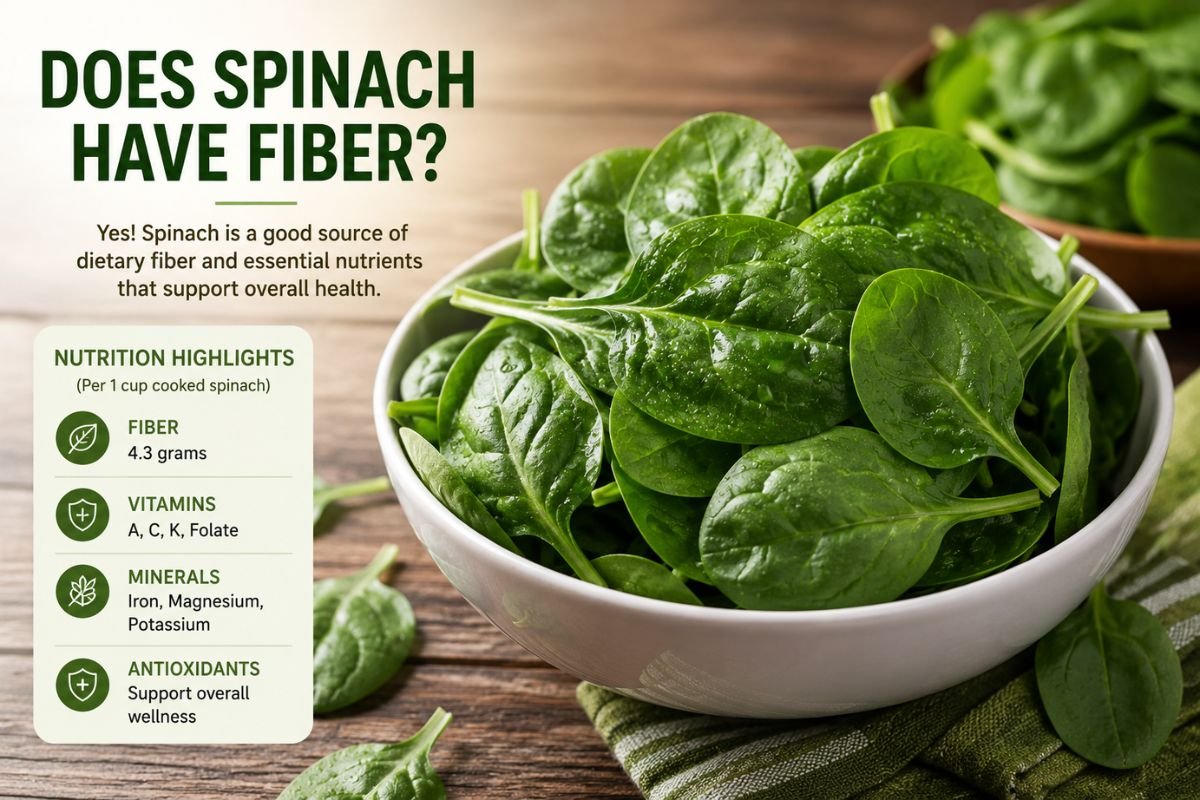
Spinach contains a moderate amount of fiber relative to its low calorie content. A typical serving of raw spinach provides a small but beneficial amount of dietary fiber.
Cooked spinach generally contains more fiber per serving because the leaves shrink significantly during cooking, allowing you to consume more spinach at once.
Although spinach alone may not meet daily fiber recommendations, combining it with other vegetables, fruits, legumes, and whole grains can help create a fiber-rich diet.
Why Fiber Is Important for Health
Fiber is essential for maintaining a healthy digestive system and supporting overall wellness. Many people do not consume enough fiber daily, which can affect digestion and eating habits.
Here are some reasons why fiber matters:
Supports Healthy Digestion
Fiber helps food move through the digestive tract more smoothly. Insoluble fiber, in particular, supports regular bowel movements and digestive comfort.
Helps You Feel Full Longer
Fiber-rich foods often help increase feelings of fullness after meals. This may help reduce unnecessary snacking and support balanced eating habits.
Supports Balanced Nutrition
Foods containing fiber are often rich in vitamins, minerals, and antioxidants as well. Spinach is a good example because it provides fiber along with several important nutrients.
Nutritional Benefits of Spinach Beyond Fiber
Spinach is not only valued for its fiber content. It is also packed with nutrients that support overall health.
Rich in Vitamins
Spinach contains vitamins such as vitamin A, vitamin C, vitamin K, and folate. These nutrients support various body functions including immunity, skin health, and normal cell function.
Contains Important Minerals
Spinach provides minerals like iron, magnesium, and potassium. These minerals are important for muscle function, hydration, and overall wellness.
High in Antioxidants
Spinach contains antioxidants that help protect the body from oxidative stress caused by free radicals.
Because spinach is nutrient-dense and low in calories, it is commonly included in healthy meal plans.
Raw Spinach vs Cooked Spinach
Both raw and cooked spinach contain fiber, but there are slight differences between them.
Raw Spinach
Raw spinach is commonly used in salads, sandwiches, and smoothies. It has a lighter texture and contains plenty of water.
Cooked Spinach
Cooking spinach reduces its volume significantly, making it easier to consume larger amounts at once. As a result, cooked spinach may provide more fiber per serving simply because more spinach fits into a smaller portion.
Both forms can be healthy choices depending on your preferences.
Easy Ways to Add Spinach to Your Diet
Spinach is versatile and easy to include in many meals. Here are some simple ideas:
- Add fresh spinach to salads
- Blend spinach into smoothies
- Mix spinach into soups or stews
- Add spinach to omelets or scrambled eggs
- Use spinach in sandwiches or wraps
- Stir spinach into pasta dishes
Combining spinach with other fiber-rich foods can help increase your total daily fiber intake.
Can Spinach Help With Weight Management?
Spinach is often included in weight management diets because it is low in calories while still being filling. The fiber and water content in spinach may help promote fullness during meals.
When paired with balanced nutrition and healthy eating habits, spinach can be part of a satisfying and nutrient-rich diet.
Are There Any Downsides to Eating Spinach?
For most people, spinach is a healthy food choice. However, spinach contains natural compounds called oxalates, which may be a concern for individuals prone to certain kidney stones.
Moderation and dietary balance are generally recommended. People with specific medical concerns should consult a healthcare professional for personalized advice.
Final Thoughts
So, does spinach have fiber? Yes, spinach does contain dietary fiber and can contribute to a healthy, balanced diet. While it may not be the highest-fiber food available, spinach offers a combination of fiber, vitamins, minerals, and antioxidants that support overall wellness.
Whether eaten raw in salads or cooked into meals, spinach is a simple and nutritious way to add more plant-based goodness to your diet. Including spinach regularly alongside other fiber-rich foods can help support healthy digestion and overall nutrition naturally.
References
- National Library of Medicine – Vegetables and Fruits – The role of dietary fiber in health promotion and disease prevention: A practical guide for clinicians.
- USDA FoodData Central – Spinach Nutrition Facts – Offers official nutritional data for spinach, including fiber, vitamins, minerals, and calorie content.
- Mayo Clinic Healthy Lifestyle and Nutrition Guide – Covers healthy eating habits, fiber intake, digestive health, and balanced nutrition recommendations.
- Cleveland Clinic – Why Fiber Matters – Explains the importance of dietary fiber for digestion, fullness, and overall wellness.
- Medical News Today – Spinach Health Benefits – Discusses spinach nutrition, antioxidants, fiber content, and potential health benefits.